Amps to Kilowatts (kW) Calculator
What is Electrical Power?
Electrical power is the rate at which electrical energy is transferred by an electric circuit, measured in watts (W) or kilowatts (kW). The relationship between amperes (current), volts (potential difference), and power is fundamental to all electrical systems.
Key Standards: Our calculator follows IEEE electrical engineering standards and National Electrical Code (NEC) guidelines for accurate power calculations. Understanding this conversion is essential for electrical system design, load calculations, and energy management.
Amperes (Amps) – Electric Current
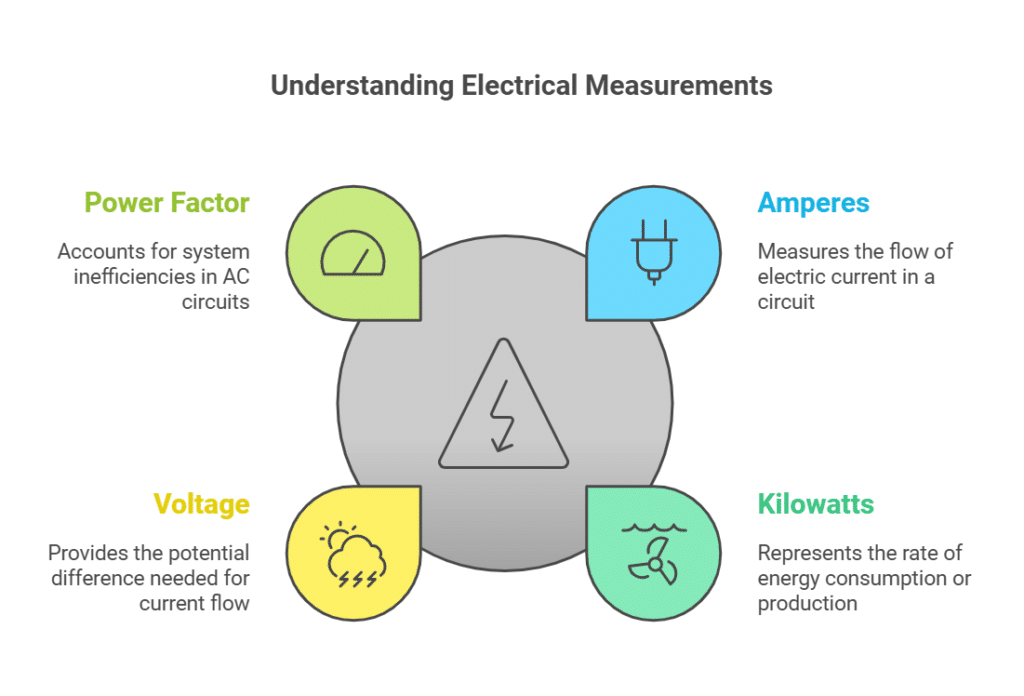
An ampere (A) is the SI unit of electric current, representing the flow of electric charge through a conductor. Named after French physicist André-Marie Ampère, it measures the quantity of electrons passing through a point in one second. One ampere equals the flow of one coulomb of charge per second.
In practical applications, current determines the size of conductors, circuit breakers, and electrical components needed for safe operation. Higher current requires larger wire gauges and protective devices to prevent overheating and electrical hazards.
Kilowatts (kW) – Electrical Power
A kilowatt (kW) is a unit of power equal to 1,000 watts, representing the rate of energy transfer or consumption. Power measures how quickly electrical energy is being used or produced, combining both voltage (electrical pressure) and current (electron flow) to determine the actual work being performed.
Understanding kilowatts is crucial for sizing generators, calculating electricity costs, and ensuring electrical systems can handle required loads. Most household appliances are rated in watts or kilowatts, indicating their power consumption during operation.
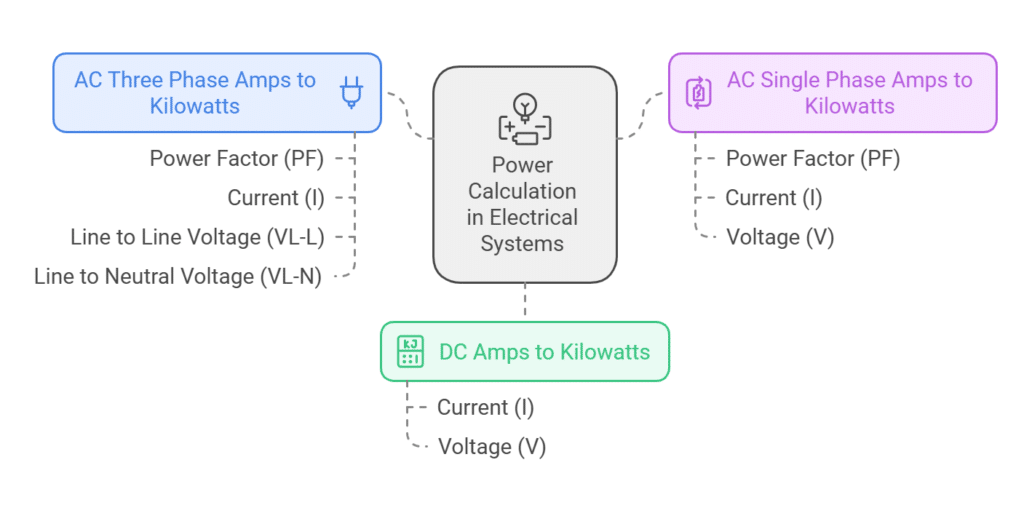
Power Calculation Formulas
I = Current in amperes (A)
V = Voltage in volts (V)
PF = Power factor (0.0 to 1.0)
I = RMS current in amperes (A)
V = RMS voltage in volts (V)
√3 = 1.732 (three-phase constant)
PF = Power factor
I = Line current in amperes (A)
VL-L = Line-to-line voltage in volts (V)
3 = Number of phases
PF = Power factor
I = Phase current in amperes (A)
VL-N = Line-to-neutral voltage in volts (V)
Practical Examples
Calculation:
P(kW) = (25 A × 48 V) ÷ 1000
P(kW) = 1,200 W ÷ 1000
P(kW) = 1.2 kW
Application: This 1.2 kW system can power typical household loads like a refrigerator, lights, and electronics simultaneously.
Calculation:
P(kW) = (0.9 × 20 A × 240 V) ÷ 1000
P(kW) = 4,320 W ÷ 1000
P(kW) = 4.32 kW
Application: This helps calculate electricity costs and ensures the circuit breaker is properly sized (typically 30A for this load).
Calculation:
P(kW) = (√3 × 0.85 × 50 A × 480 V) ÷ 1000
P(kW) = (1.732 × 0.85 × 50 × 480) ÷ 1000
P(kW) = 35,294 W ÷ 1000
P(kW) = 35.29 kW (approximately 47 horsepower)
Application: Essential for motor sizing, energy audits, and electrical system design in manufacturing facilities.
What is Power Factor?
Power factor (PF) is the ratio of real power (watts) to apparent power (volt-amperes) in AC circuits, ranging from 0 to 1. It represents how efficiently electrical power is being used. A power factor of 1.0 (unity) means all power is being used effectively, while lower values indicate energy is being wasted in reactive components.
Typical Power Factors:
• Resistive loads (1.0): Incandescent lights, electric heaters, toasters
• High PF (0.9-0.95): Modern power supplies, LED drivers, efficient motors
• Medium PF (0.8-0.9): Standard electric motors, fluorescent lights
• Low PF (0.5-0.8): Welders, uncompensated motors, older transformers
Poor power factor increases current draw for the same real power, requiring larger conductors and increasing energy costs. Industrial facilities often use power factor correction capacitors to improve efficiency and avoid utility penalties. For apparent power calculations, use our Amps to KVA Calculator.
Applications & Use Cases
Electrical System Design
Electrical engineers use amps-to-kilowatts conversion to size conductors, circuit breakers, and transformers. Understanding the power requirements ensures safe operation within equipment ratings and prevents overheating, voltage drop, and circuit failures. For comprehensive electrical calculations, also check our Ohm’s Law Calculator and Torque Calculator.
Energy Cost Calculation
Converting current measurements to kilowatts enables accurate electricity cost calculations. Utility companies charge based on kilowatt-hours (kWh), so knowing the power consumption in kW multiplied by operating hours gives energy usage for billing purposes. Use our kWh Energy Cost Calculator for detailed energy cost analysis.
Generator & UPS Sizing
Properly sizing backup power systems requires knowing the total load in kilowatts. This calculator helps determine the minimum generator or uninterruptible power supply (UPS) capacity needed to support critical electrical loads during power outages or emergencies. For motor applications, also consider our Horsepower to Amps Calculator.
Solar & Renewable Energy
Solar panel systems, wind turbines, and battery storage systems often provide current and voltage specifications. Converting to kilowatts helps compare system capacities, calculate energy production, and size inverters for grid-tied or off-grid applications. For energy storage calculations, try our Amp-Hours to Watt-Hours Calculator.
⚠️ Electrical Safety Disclaimer
This calculator provides theoretical calculations based on standard electrical engineering formulas for educational and planning purposes. Working with electrical systems can be dangerous and should only be performed by qualified, licensed electricians following local electrical codes and safety regulations. Always verify calculations with professional engineering analysis and comply with National Electrical Code (NEC), IEEE standards, and local building codes. Improper electrical work can result in serious injury, death, fire, or equipment damage.